
Book Remedial Massage Southbank

You finish a long shift with a stiff neck, a sore shoulder, or a calf that complains every time you take the stairs. A quick massage may sound appealing, but remedial massage is more useful when the problem is defined first. The therapist should ask what changed, when symptoms appear, what training or work demands you face, and whether pain travels elsewhere. That conversation is not a formality. It separates a short-lived relaxation treatment from a session aimed at changing movement, easing muscle tension, or deciding that another type of care is more suitable. A session may include assessment, hands-on work, and practical advice rather than continuous pressure from start to finish. If you are comparing options for remedial massage southbank, ask how the therapist will measure progress. Useful measures might include turning your head farther, reaching overhead with less discomfort, or walking without a familiar pulling sensation. A therapist may use slower pressure on sensitive tissue, firmer work on restricted areas, or movement between techniques. More pressure is not automatically more effective, and soreness afterward is not proof that treatment worked. One useful concept is referred pain. This means a tight or irritated area can create pain somewhere nearby, so the spot that hurts is not always the spot that needs attention. A tender point in the upper back, for example, may contribute to discomfort around the shoulder blade, while prolonged sitting can make the hips feel tight without a single damaged muscle being responsible. Another concept is a trigger point, a sensitive section within a muscle that may hurt when pressed and sometimes produces pain in a nearby area. These ideas guide assessment, but they do not replace a medical diagnosis. Consider a runner who feels calf tightness during the final kilometer of each run. Massage may temporarily reduce the sensation, yet the recurring pattern could also involve a sudden training increase, limited ankle movement, footwear changes, or inadequate recovery. A sensible plan might combine gentle treatment with a review of running volume and calf loading. Load tolerance means the amount of work a body can handle before symptoms rise. Gradually adjusting that amount is often more practical than relying on repeated appointments while keeping the same training mistake. Timing and intensity involve a trade-off. A deeper session immediately before a race, heavy lifting day, or long flight may leave some people feeling tender or less prepared, while lighter work may be easier to tolerate. After an event, a person may prefer treatment that reduces the sense of tightness without adding more irritation. Tell the therapist about deadlines, workouts, sleep, medication, recent injuries, and how your body usually reacts. A clear plan can then match the session to your schedule instead of treating every visit as identical. Safety also depends on screening. Persistent swelling, unexplained bruising, significant weakness, numbness, fever, sudden severe pain, or symptoms after major trauma deserve medical assessment rather than casual massage. If you already see a physician, physiotherapist, or other health professional, sharing relevant advice can prevent conflicting plans. A clinic with several practitioners may also be able to direct you to the most appropriate person. For broader sports physiotherapy guidance, use the appointment discussion to clarify whether massage is the main need or one part of a wider recovery plan. Before booking, be specific about the result you want and the time you have available. Saying that your shoulder hurts is less useful than explaining that reaching a high shelf hurts after computer work, while swimming feels fine. Wear clothing that allows comfortable access to the area and speak up if pressure feels sharp, alarming, or hard to tolerate. Afterward, note what changed during ordinary activities, not just how relaxed you felt on the table. If improvement fades quickly or symptoms keep returning, reassessment and a change in the plan may be wiser than simply booking the same treatment again.
Practical Concrete Sealing Tips for Hamilton Properties

Rain can leave dark patches on a Hamilton driveway, while tracked-in grit may make a patio look permanently dull. Sealing can protect concrete from water absorption, staining and everyday wear, but it will not level a bad repair or disguise serious cracking. Inspect the slab in daylight before arranging work. Note oil marks, loose edges, worn paths and places where water remains after rain. If you are comparing local services, the information on concrete sealing hamilton can help clarify which preparation and finishing methods may fit the surface. Preparation has a direct effect on the finished result. Concrete contains small connected pores that can hold moisture, dust and contaminants. Grease, old paint, curing residue and powdery material may prevent a new sealer bonding evenly. Cleaning could involve pressure washing, degreasing, acid washing or light etching, depending on the surface. Etching alters the top layer and gives it a more receptive texture, whereas mechanical grinding removes a thin layer and produces a cleaner, more uniform base. These processes should not be treated as interchangeable shortcuts. Picture a 15-year-old driveway with tyre marks, small chips and a previous patch sitting slightly higher than the surrounding slab. Washing may improve its colour, but it will not make those surfaces level. Cracks, damaged corners and hollow or loose concrete should be assessed before sealing. A practitioner will often mark problem areas, check repaired sections and confirm that the slab is sound before proceeding. On a garage floor, oil may have travelled below the visible stain, so the cleaner needs enough contact time, followed by thorough rinsing and drying. Residue left behind can cause patchy colour or poor adhesion. The sealer should suit both the concrete and the way the area is used. A penetrating product enters the surface and can reduce water absorption without leaving a substantial film. A film-forming product remains on top and may provide a more noticeable change in sheen, although scratches and worn sections can become easier to see. A high-gloss finish is not automatically the best choice for a wet path, step or driveway. Discuss the effect on grip, colour and future cleaning. Decorative work may also need grinding, polishing or an overlay completed before the protective coat is applied. Hamilton weather makes timing worth checking rather than guessing. The slab must be clean and dry, and the surface and surrounding conditions should suit the chosen product. Damp patches can cloud a finish or interfere with bonding. Edges, control joints, corners and areas beside walls need deliberate coverage because a roller or sprayer can pass over them quickly. Thin, even coats are often easier to control than one heavy application, though the product instructions determine the correct method. Keep vehicles, pets and pedestrians away for the stated curing period, even if the surface feels dry. Interior and commercial spaces may call for a different sequence. An uneven living-room slab could be ground to reveal a more consistent aggregate pattern, then polished before protection is applied. A decorative overlay may refresh a sound but unattractive base, provided the substrate is properly prepared and the overlay is sealed with a compatible product. For a shop entrance or office foyer, discuss wet shoes, tracked-in grit, trolley movement and the preferred sheen before work starts. A finish suitable for a lightly used room may wear differently in a doorway that receives constant traffic. Maintenance should be planned from the day the work is completed. Sweep outdoor concrete regularly so grit is not ground into walking routes, and wipe oil or drink spills before they spread. Use cleaning methods recommended for the finish instead of assuming a strong chemical will improve it. Check wheel paths, furniture positions, doorways and turning points for dullness or renewed water absorption. Keep the invoice, preparation notes, sealer details and application date with the property records. That information makes later inspections more useful and helps guide future concrete treatment options at the same address: concrete treatment options.
Basement Waterproofing and Sump Pumps
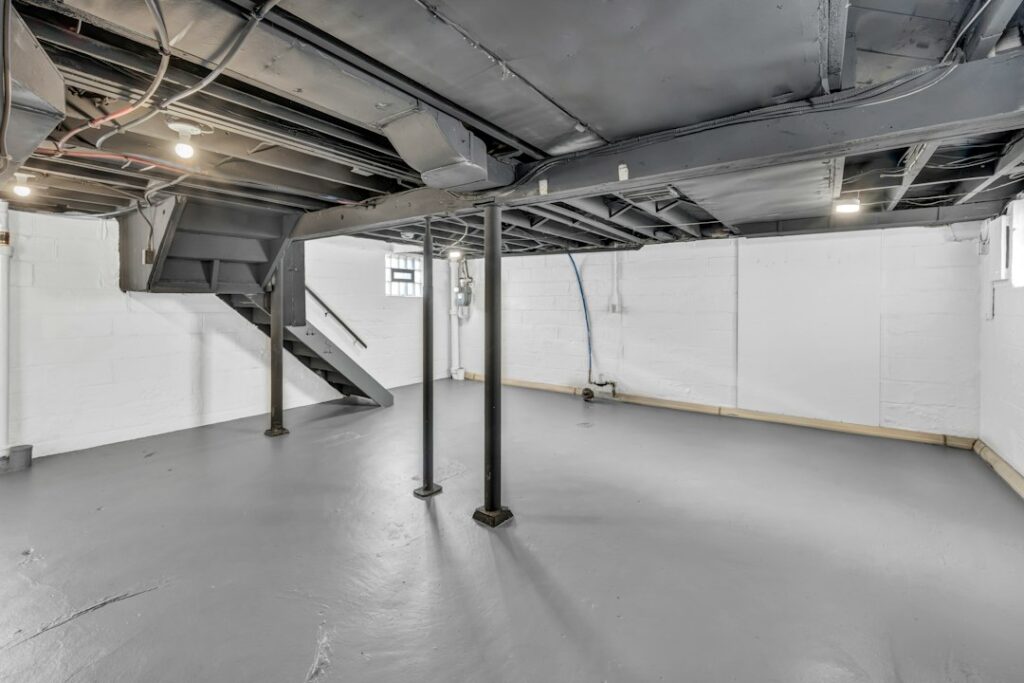
A damp stripe on a basement wall, a musty odor near the stairs, or a puddle beneath a window deserves investigation before anyone reaches for paint or a dehumidifier. Dry the area carefully, photograph the damage, and record what happened beforehand. Rain, snowmelt, laundry use, and plumbing activity point toward different sources. Check for electrical hazards before plugging in a fan, and keep children away from standing water. A dated note in a home maintenance file can also help a contractor compare the leak with later storms instead of relying on memory. Water may enter through a foundation crack, porous masonry, a floor joint, or a failed window well drain. Hydrostatic pressure rises when surrounding soil remains saturated, pushing groundwater against walls and floors. Efflorescence, the white mineral residue left on masonry after moisture dries, suggests repeated water movement but does not identify the exact entry point. Condensation has a different cause: humid indoor air settles on a cold wall or pipe. Feel the surface, inspect nearby plumbing, and use a humidity reading before paying for a repair designed for groundwater. Exterior drainage deserves attention before interior construction begins. Gutters need to carry roof runoff away from the foundation, and downspouts should not release water directly beside the wall. Check for settled soil, blocked drains, cracked paving, and sprinkler spray reaching the masonry. The site should generally shed water away from the house, although the appropriate grade depends on the property and its construction. A basement that stays dry during a brief shower but leaks after hours of rain may have a surface drainage problem rather than one isolated crack. Small, localized sources sometimes have focused solutions. If a window well fills during a storm, remove leaves and sediment, inspect the well drain, and consider a properly fitted cover. A plumbing leak should be repaired at the pipe rather than treated as a foundation failure. Exterior excavation can expose and repair a wall, but access, landscaping, utilities, and site conditions affect its practicality. Interior work may be less disruptive. Review basement waterproofing proposals by asking whether the membrane blocks water, redirects it, or protects a separate drainage layer. An interior perimeter drain collects seepage along the floor edge and directs it to a sump basin. The pump then lifts the water to an approved discharge location. This arrangement can reduce pressure and manage incoming water, but it does not make the outside face of the foundation dry. It may also require cutting the slab, giving up some floor-edge space, and maintaining a pump. Before approving the work, ask where the drain runs, how cleanouts are accessed, and how the discharge will be kept from returning toward the house. A sump system works only as a complete setup. The basin must receive water, the float must move freely, and the discharge pipe must remain connected and directed safely away from the foundation. Test the pump by adding water to the basin, then listen for unusual cycling or grinding. Frequent starts can signal substantial inflow or a drainage fault. Homes exposed to severe storms may benefit from backup power, although that adds equipment and maintenance. Keep the installation instructions and service records with the electrical panel information so a technician can find them quickly during an outage. Repair materials should match the movement and moisture conditions. A flexible sealant may suit a minor, active crack, while a rigid repair can fail if the foundation shifts. Liquid-applied membranes can provide a continuous water-resistant layer when concrete is clean, sound, and properly detailed at corners, joints, and penetrations. Ask for surface preparation steps, the intended drainage path, warranty limits, and the response if water returns. A useful waterproofing project plan identifies the suspected source, repair method, discharge route, expected disruption, and maintenance duties. Afterward, keep boxes off the floor, inspect walls after major storms, clean gutters seasonally, and control indoor humidity with ventilation or a dehumidifier.