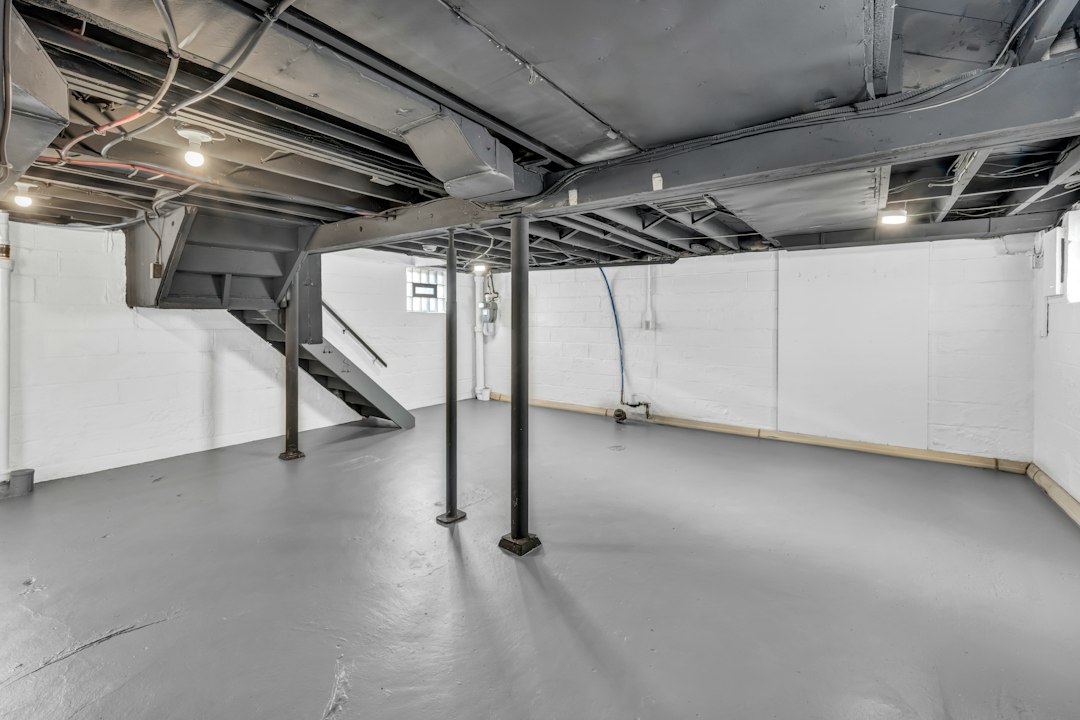

Water may enter through a foundation crack, porous masonry, a floor joint, or a failed window well drain. Hydrostatic pressure rises when surrounding soil remains saturated, pushing groundwater against walls and floors. Efflorescence, the white mineral residue left on masonry after moisture dries, suggests repeated water movement but does not identify the exact entry point. Condensation has a different cause: humid indoor air settles on a cold wall or pipe. Feel the surface, inspect nearby plumbing, and use a humidity reading before paying for a repair designed for groundwater.
Exterior drainage deserves attention before interior construction begins. Gutters need to carry roof runoff away from the foundation, and downspouts should not release water directly beside the wall. Check for settled soil, blocked drains, cracked paving, and sprinkler spray reaching the masonry. The site should generally shed water away from the house, although the appropriate grade depends on the property and its construction. A basement that stays dry during a brief shower but leaks after hours of rain may have a surface drainage problem rather than one isolated crack.
Small, localized sources sometimes have focused solutions. If a window well fills during a storm, remove leaves and sediment, inspect the well drain, and consider a properly fitted cover. A plumbing leak should be repaired at the pipe rather than treated as a foundation failure. Exterior excavation can expose and repair a wall, but access, landscaping, utilities, and site conditions affect its practicality. Interior work may be less disruptive. Review basement waterproofing proposals by asking whether the membrane blocks water, redirects it, or protects a separate drainage layer.
An interior perimeter drain collects seepage along the floor edge and directs it to a sump basin. The pump then lifts the water to an approved discharge location. This arrangement can reduce pressure and manage incoming water, but it does not make the outside face of the foundation dry. It may also require cutting the slab, giving up some floor-edge space, and maintaining a pump. Before approving the work, ask where the drain runs, how cleanouts are accessed, and how the discharge will be kept from returning toward the house.
A sump system works only as a complete setup. The basin must receive water, the float must move freely, and the discharge pipe must remain connected and directed safely away from the foundation. Test the pump by adding water to the basin, then listen for unusual cycling or grinding. Frequent starts can signal substantial inflow or a drainage fault. Homes exposed to severe storms may benefit from backup power, although that adds equipment and maintenance. Keep the installation instructions and service records with the electrical panel information so a technician can find them quickly during an outage.
Repair materials should match the movement and moisture conditions. A flexible sealant may suit a minor, active crack, while a rigid repair can fail if the foundation shifts. Liquid-applied membranes can provide a continuous water-resistant layer when concrete is clean, sound, and properly detailed at corners, joints, and penetrations. Ask for surface preparation steps, the intended drainage path, warranty limits, and the response if water returns. A useful waterproofing project plan identifies the suspected source, repair method, discharge route, expected disruption, and maintenance duties. Afterward, keep boxes off the floor, inspect walls after major storms, clean gutters seasonally, and control indoor humidity with ventilation or a dehumidifier.