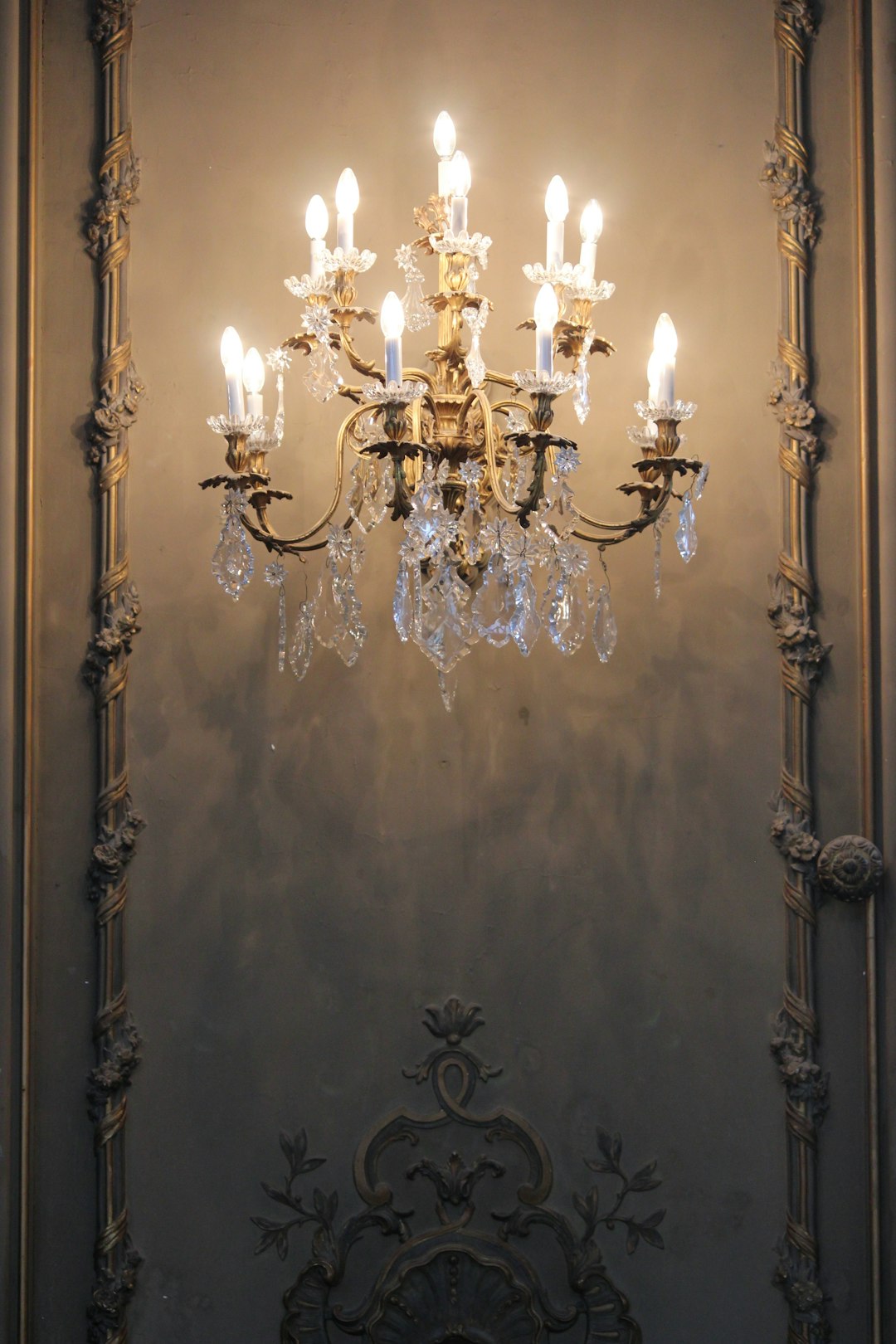

Another common belief is that every Murano Venetian chandelier is an antique or a museum piece. Reality is more nuanced. Murano refers to the Venetian island long associated with glassmaking, while Venetian style can describe forms and techniques influenced by that tradition. Current pieces may draw on older shapes while using modern electrical components and manufacturing methods. Hand finishing, individually shaped elements and variation in clear or coloured glass can be signs of craft, but they do not automatically establish age or provenance. If authenticity matters, ask for clear information about origin, materials, dimensions and the maker rather than relying on an elaborate appearance.
The glass itself is often misunderstood. Crystal and Murano glass are not interchangeable terms, and the visual effect comes from more than sparkle. Opaline glass has a milky, diffused appearance, while clear glass creates sharper reflections and allows the bulbs to remain visually prominent. Coloured glass can alter the atmosphere, particularly in rooms with warm timber or strong wall paint. Some decorative pieces include glass arms, leaves, drops or flowers, each affecting the silhouette and the way light travels across the ceiling. A murano venetian chandelier should therefore be judged in daylight as well as under its lamps.
Scale is another area where myth can mislead. A large chandelier is not automatically suitable for a high ceiling, and a small fitting is not always safer in a narrow room. Think about the table, the circulation route and the visual weight of nearby furniture. Over a six-seat dining table, a broad, layered form may feel balanced, whereas a slim linear arrangement could suit a long breakfast surface better. Suspension height matters too: people need a clear sightline across the table, while the ceiling canopy should sit securely and look intentional. These practical relationships usually matter more than the fitting’s advertised style label.
The technical specification deserves the same attention as the ornament. Lumens describe the amount of visible light, so they are more useful than simply counting bulbs. Colour temperature describes whether the light appears warmer and golden or cooler and whiter; a warm setting often complements traditional glass and timber. Dimmability allows the chandelier to change from useful dining light to a softer evening glow, provided the bulbs, dimmer and wiring are compatible. Check the required lamp type, voltage, energy rating and maximum wattage before purchase. These details affect performance, heat and maintenance, not merely the wording of the product description.
Installation is not a minor finishing task. A ceiling outlet must be able to support the fitting through suitable fixings, and the suspension system needs to match both the chandelier’s weight and the ceiling construction. In an older house, hidden joists, plasterwork or previous wiring may complicate positioning. A qualified electrician can assess the circuit, connect the fitting safely and confirm whether a dimmer is appropriate. This is especially relevant in a hallway or stairwell, where a low-hanging decorative piece could obstruct movement. Good installation also leaves the canopy level and the arms evenly arranged, preserving the intended composition.
Careful buying does not mean choosing the most elaborate design. Consider how often the room is used, how easy the glass will be to reach and whether replacement bulbs are readily available. In a busy family dining room, fewer exposed ornaments may be more practical than a densely layered arrangement. In a quiet entrance hall, delicate details may be easier to live with because they are less exposed to daily contact. Comparing proportions, finish and lighting performance across specialist collections, including broader italian lighting design, can clarify your preferences. The right choice is the one that delivers character while fitting the room’s real routines.